Mon 20.07.2026
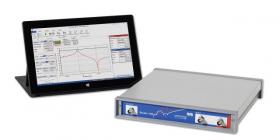
How can you quickly assess the true condition of a battery without invasive testing? Impedance analysis with the Bode 500 enables non-invasive diagnostics of Li-ion cells, helping to identify degradation and gain key insights for development and testing.
How can you quickly assess the true condition of a battery without invasive testing? OMICRON Lab presents a practical application approach showing how to measure the impedance of Li-ion cells using the Bode 500 analyzer and gain valuable insights into their condition.
Battery impedance is not just a single value - its frequency-dependent behavior reveals:
The key advantage is that this is a non-invasive method - there is no need to disassemble or destructively stress the battery.
The OMICRON Lab application note demonstrates the method:Shunt-Thru with series resistance (Rs)This method is ideal for:
The series resistors act as a voltage divider, protecting the analyzer inputs while still enabling accurate measurements.
A typical configuration includes:
The physical setup is also critical - short cables, coaxial connections, and minimizing parasitic effects are essential for accurate results.
Practical results show:
In other words: the battery is a dynamic system - its impedance changes with its condition and operating state.
You can find the complete measurement procedure, setup, and result interpretation here:
Open OMICRON Lab Application Note - Battery Impedance Measurement








We cooperate with partners and resellers in other European countries
View partners