Thu 16.07.2026
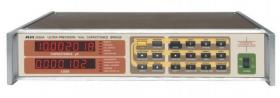
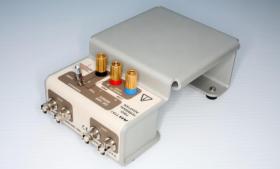
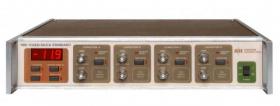
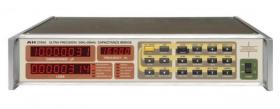
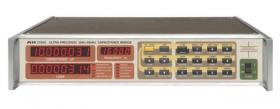
Andeen‑Hagerling capacitance bridges set the standard for ultra‑precise capacitance and loss measurement. With exceptional sensitivity, they are widely used across science and industry—from advanced materials research and nanotechnology to high‑end metrology and semiconductor testing.
Andeen‑Hagerling capacitance bridges represent the global benchmark in ultra‑precise capacitance and loss measurement. With exceptional sensitivity, long‑term stability, and the ability to detect even the smallest variations, they enable applications where conventional measurement techniques reach their limits. Wherever minute changes carry critical information, these instruments become indispensable.
Dielectric Characterization of Materials
One of the primary applications is the precise determination of permittivity and dielectric losses. These bridges are used to characterize solids, liquids, and gases-from semiconductors and glass to polymers, composites, and insulating materials. Such measurements are essential for both advanced material development and quality control.
Nanotechnology and Quantum Structures
In nanotechnology, capacitance bridges play a crucial role in studying carbon nanotubes, nanowires, and quantum dots. They allow detailed analysis of charge transport, quantum capacitance, and discrete electronic effects. At these scales, extreme measurement sensitivity is essential due to the very small signal levels involved.
Dilatometry and Deformation Measurement
Capacitive techniques are among the most sensitive methods for detecting dimensional changes. In dilatometry, they are used to measure thermal expansion, while in magnetostriction experiments they capture deformations induced by magnetic fields. These applications are vital for precision engineering and advanced material research.
Ferroelectrics and Phase Transitions
Capacitance bridges enable detailed investigation of ferroelectric materials, including polarization behavior, relaxation phenomena, and phase transitions. More broadly, they are used to monitor structural changes in materials, where capacitance variations directly reflect internal reorganization.
Biophysics and Biological Systems
In biophysics, these instruments are used to study the electrical properties of biological structures such as cell membranes. They provide insight into how capacitance changes with environmental conditions, chemical composition, or external stimuli, supporting both biological research and medical science.
Liquid Crystals and Soft Matter
For liquid crystals, capacitance bridges help track dielectric properties across different phases and phase transitions. This is critical for the development of display technologies and advanced optical materials.
Low-Temperature Physics and Cryogenic Research
Designed for stability even under extreme conditions, Andeen‑Hagerling bridges are widely used in cryogenic environments. They support research into quantum phenomena, where measurement precision and stability are absolutely critical.
Magnetic Phenomena and Magnetometry
In magnetic research, these bridges are used to study magnetocapacitance, magnetoresistance, and magnetodielectric effects. In magnetometry, they enable highly precise indirect measurements of magnetic forces and moments through capacitance changes.
Pressure Sensing and Bolometry
Capacitance bridges can detect extremely small variations caused by pressure or absorbed energy. This makes them ideal for pressure sensors and bolometers, including applications in radiation detection and ultra‑sensitive energy measurements.
Scanning Capacitance Microscopy and Spectroscopy (SCM)
When integrated with scanning techniques, they enable high‑resolution mapping of local capacitance variations on surfaces. This is particularly important in semiconductor analysis, thin‑film characterization, and nanoscale research.
Single-Electron Effects and Tunneling
These instruments support the study of single‑electron tunneling (SET) and other quantum transport phenomena by detecting discrete charge transfer events. They are also widely used in investigating tunneling behavior in nanoscale systems.
Superconductivity and Superfluidity
Capacitance bridges are applied in research on superconductors and superfluids, helping to identify phase transitions and subtle changes in physical properties within these highly sensitive systems.
Thin Films and Atomic Layer Deposition (ALD)
In nanofabrication processes such as Atomic Layer Deposition, they enable precise monitoring of thin‑film properties and thickness. This is essential for modern electronics, optics, and advanced coatings.
Nano-Force Metrology and Precision Positioning
Their ability to detect extremely small distance changes makes them ideal for nano‑force measurements and high‑precision positioning systems. They provide feedback with nanometer‑level resolution, supporting cutting‑edge instrumentation.
Scanning Tunneling Microscopy (STM)
In STM applications, capacitance bridges enhance sensitivity to variations in tunneling conditions, improving measurement stability and resolution at the atomic scale.
Glass and Amorphous Materials Research
Capacitance measurements offer valuable insight into relaxation processes and structural dynamics in glass and other amorphous materials, contributing to both fundamental understanding and industrial applications.
Gravitational Experiments
Thanks to their extraordinary sensitivity, capacitance bridges can be used in experiments aimed at detecting extremely weak forces, including those related to gravitational effects.
Semiconductor Testing and Characterization
In the semiconductor industry, they are used to analyze device structures, detect defects, and evaluate electrical properties. High‑precision capacitance measurement is critical for ensuring device performance and reliability.
Electrical and Capacitance Metrology
Andeen‑Hagerling bridges are widely regarded as reference instruments in metrology laboratories worldwide. They are used for calibration, realization of capacitance standards, and the most accurate measurements of capacitance and dissipation factor.
A Platform for Advanced and Emerging Applications
Beyond these established uses, capacitance bridges continue to find applications in highly specialized and experimental fields. Their combination of precision, stability, and reliability makes them a versatile tool for innovation.
Precision Where It Matters Most
From fundamental physics to industrial development and high‑end metrology, Andeen‑Hagerling capacitance bridges provide a foundation for discovery and accuracy. They reveal changes that would otherwise remain undetectable-enabling breakthroughs where detail makes all the difference.








We cooperate with partners and resellers in other European countries
View partners